Unlock the Power of Trailing Stops: Key Definitions and Principles for Aspiring Traders
What is the essential definition of a trailing stop in trading?
A trailing stop in the realm of crypto trading represents a sophisticated order type that automatically adjusts its stop-loss price in response to price movements. This innovative order type aims to maximise profits while simultaneously managing losses in the notoriously volatile world of cryptocurrency markets. By employing this strategy, traders can adeptly navigate price fluctuations, ensuring they take advantage of upward trends while protecting their investments against potential downturns.
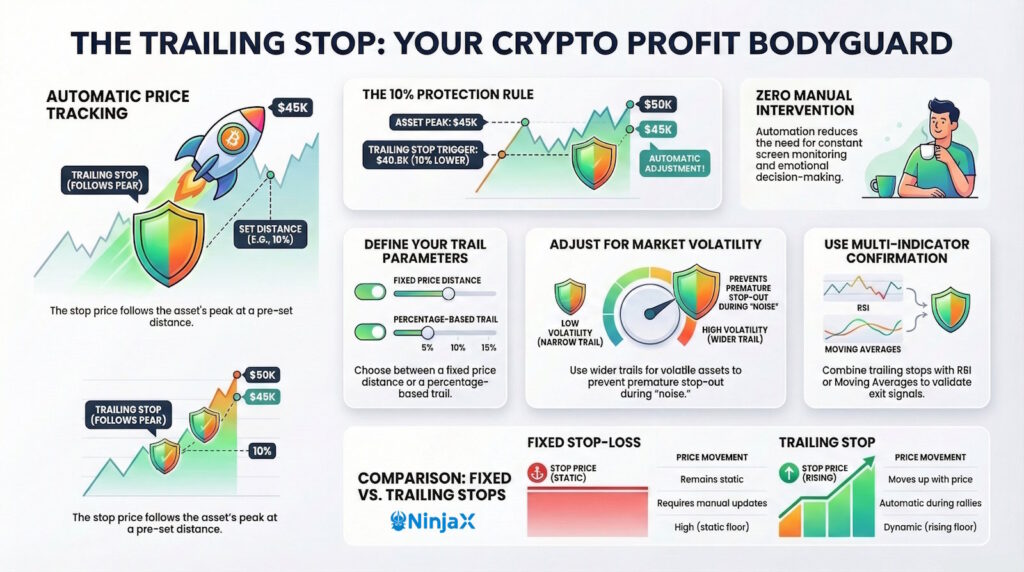

For instance, if a trader sets a 10% trailing stop on Bitcoin at a price of $40,000, and the price later rises to $45,000, the trailing stop will adjust to $40,500. This adjustment occurs as it maintains a 10% distance below the latest peak. Such a mechanism effectively safeguards profits while allowing for the potential of further price increases, thus optimising trading strategies in a fluctuating market.
Key Components to Grasp Regarding Trailing Stop Orders
Understanding trailing stops requires recognising vital components, including the activation price and the trail amount. These elements work together to streamline the management of crypto trades by automating sell orders in response to market changes. This automated approach significantly diminishes the need for constant monitoring, enabling traders to ‘set it and forget it'. The activation price indicates the threshold at which the trailing stop becomes operational, while the trail amount specifies the distance the stop will follow as the asset’s price continues to rise.
Exploring the Functionality of Trailing Stops in Trading
Trailing stops function by diligently tracking the highest price of an asset and adjusting simultaneously as its value increases. The primary benefits of trailing stops encompass:
- Flexibility: They readily adapt to swiftly changing market conditions.
- Automation: This capability reduces the necessity for manual trading interventions, fostering a more streamlined trading process.
- Price Tracking: They consistently monitor price changes to effectively lock in profits.
- User-Friendliness: Most trading platforms offer accessible setups for trailing stops, making them easy to implement.
These attributes emphasise the crucial role of trailing stops in modern trading strategies, particularly for traders aiming to maximise profit potential while efficiently managing risk.
How to Implement a Trailing Stop for Greater Trading Success
Step-by-Step Process for Establishing a Trailing Stop Order
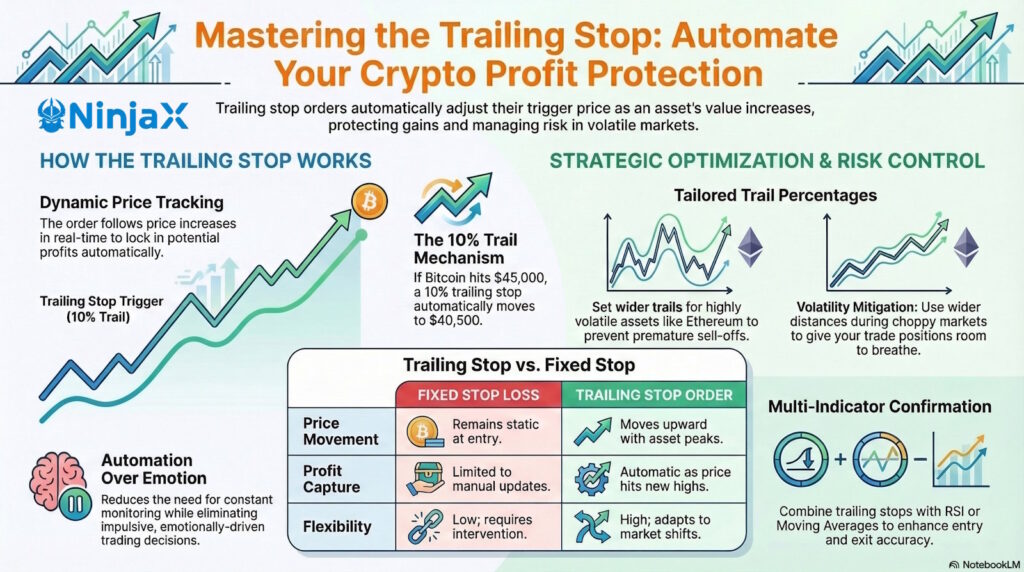
To effectively establish a trailing stop in crypto trading, traders must first identify key parameters, including the desired percentage or price distance. Once these parameters are clearly articulated, the trader can proceed to place the order on their selected trading platform. This systematic process ensures that the order activates under the specific conditions set to safeguard their investment positions. This organised approach not only streamlines trading strategies but also enhances profit potential without requiring constant oversight from the trader.
What are the standard configurations for setting trailing stops?
Standard configurations typically encompass trail percentages and activation thresholds, which traders employ to tailor orders across diverse assets. These configurations empower traders to adapt to the inherent market volatility while retaining control over their trading actions. For example, a trader may opt for a 5% trail on a highly volatile asset such as Ethereum, providing enough flexibility to absorb market fluctuations while still safeguarding profits.
What essential factors should traders consider before implementing trailing stops?
Before deploying a trailing stop, traders should assess crucial factors, including prevailing market conditions, the volatility of the asset, and their individual risk tolerance. These considerations significantly influence the effectiveness of trailing stops and the potential outcomes within the fast-paced trading landscape. For instance, during a robust bull market, a tighter trailing stop might be more suitable, whereas a wider trail could provide better protection in a fluctuating market, thus allowing for greater flexibility to navigate price movements.
Why Should Traders Harness the Benefits of Trailing Stops?
The advantages of integrating trailing stops into crypto trading strategies are substantial, as they facilitate the automatic locking in of profits as prices shift favourably. This functionality enables traders to maximise trends without the burden of constant vigilance. Furthermore, trailing stops greatly enhance risk management by minimising emotional trading decisions and seamlessly adapting to market fluctuations. Ultimately, these stops improve the overall effectiveness of trading strategies, empowering traders to focus on broader market trends rather than becoming entangled in daily price movements.
What Risks Should Be Acknowledged and Mitigated in Trailing Stops?
Potential risks associated with stop orders encompass premature activation during volatile market conditions or failing to capture the full extent of gains due to rapid market shifts. Crypto traders can mitigate these risks by selecting wider trails, employing multiple indicators for additional confirmation, and routinely reviewing orders to ensure alignment with the evolving market landscape. This proactive strategy is essential for maintaining the effectiveness of trailing stops as market conditions fluctuate.
How Does a Trailing Stop Operate in Cryptocurrency Trading?

Understanding the Mechanics Behind Trailing Stops
A trailing stop operates by moving in alignment with the price of the cryptocurrency, effectively locking in profits when market trends shift. This mechanism provides a protective buffer against sudden price drops, ensuring that traders do not exit too early. It allows traders to capitalise on upward price movements while maintaining a safety net against potential downturns in the market.
What Real-World Scenarios Demonstrate Trailing Stop Functionality?
A trailing stop can activate during a cryptocurrency market rally, adjusting to new price highs before executing a sale. Notable examples include:
- Bull Runs: If Bitcoin rises from $40,000 to $50,000 with a 10% trailing stop, it would adjust to $45,000.
- Market Corrections: During a market correction, the trailing stop can secure profits by executing a sale when prices decline significantly.
- Volatile Swings: A trailing stop is essential for preventing losses during rapid price fluctuations, ensuring traders exit at advantageous levels.
- Market Trends: They empower traders to leverage sustained upward movements while minimising exposure to risk.
These practical scenarios highlight the adaptability and effectiveness of trailing stops across various market conditions, underscoring their value as an essential trading tool.
What Triggers and Adjustments Are Vital for Trailing Stops?
Triggers for trailing stops occur when prices fall by a predetermined amount from their highs, activating a mechanism that allows traders to fine-tune trailing stops for improved performance in the cryptocurrency markets. This adaptability is crucial amidst ongoing price fluctuations, enabling traders to respond swiftly to market changes while safeguarding their investments.
Expert Insights on Optimising Trailing Stops in Cryptocurrency Trading
Thorough Examination of the Effectiveness of Trailing Stops
Expert analyses reveal that trailing stops significantly enhance cryptocurrency trading strategies by providing dynamic protective measures. For example, during an upward market rally, traders employing trailing stops can fully leverage price surges while securing profits at predetermined levels. Empirical studies indicate that the effective implementation of trailing stops leads to substantial profit retention, particularly during periods of market volatility.
Practical Strategies for Optimal Trailing Stop Utilisation in Trading
To maximise the advantages of trailing stops within cryptocurrency portfolios, traders should establish precise trailing stops based on historical price data. This approach allows traders to optimise gains while minimising exposure to adverse price shifts. Moreover, regularly adjusting trailing stops in response to changing market trends can enhance trading outcomes, ensuring that strategies remain aligned with the current market environment.
What Risks Exist, and How Can They Be Effectively Mitigated?
Experts advise maintaining vigilance for triggers that may arise from inherent market volatility and uncertainty, suggesting the integration of complementary tools. This includes utilising additional indicators, such as moving averages or volume analysis, to provide further confirmation prior to executing stop orders. By effectively balancing risks and rewards, traders can refine their overall strategy, achieving more consistent trading results over time.
What Are the Primary Benefits of Implementing Trailing Stops in Trading?
What key advantages do trailing stops offer to traders?
The primary benefits of using trailing stops in trading encompass automatic profit locking and a reduction in emotionally driven decisions throughout the trading process. This functionality facilitates hands-free trade management amidst price fluctuations, thereby enhancing overall trading strategies without requiring constant oversight. Traders can allocate more time to analysing broader market conditions instead of micromanaging individual trades, resulting in more informed and rational decision-making.
How Do Trailing Stops Contribute Long-Term Value to Portfolio Management?
Trailing stops significantly bolster sustained growth in cryptocurrency holdings by protecting profits over extended periods. They empower traders to maintain their positions throughout market cycles with minimal intervention, ensuring that profits remain intact even during challenging market phases. This long-term strategy is fundamental for constructing a resilient trading plan that withstands various market conditions.
How Can Trailing Stops Be Integrated with Other Trading Tools for Enhanced Effectiveness?
Combining trailing stops with indicators such as moving averages or the R-Squared can lead to the development of comprehensive trading strategies within the cryptocurrency landscape. These integrations highlight how trailing stops complement risk management practices in dynamic markets, enabling traders to refine their methods and achieve more favourable trading outcomes.
Research-Backed Insights on the Benefits of Trailing Stops in Crypto Trading
What evidence supports performance improvements through trailing stops?
Recent studies illustrate that trailing stops significantly enhance trade results in cryptocurrency by adapting to price fluctuations. By implementing adjustments informed by empirical data, traders can boost profitability and ensure their trading strategies remain effective amidst evolving market dynamics.
What Comparative Advantages Do Trailing Stops Hold Over Fixed Stop Orders?
Research suggests that trailing stops generally outperform static orders in the crypto trading sector due to their capacity to trail price highs. For instance, traders employing trailing stops during periods of high volatility often achieve superior loss prevention compared to those utilising fixed stops. This adaptability fosters trader confidence and ultimately contributes to improved trading results.
How Does the Longevity of Trailing Stops Influence Market Strategies?
Expert evaluations demonstrate that trailing stops can sustain cryptocurrency investments through varying market cycles. By applying strategies grounded in empirical evidence over the long term, traders can navigate market fluctuations more effectively while safeguarding their capital. This resilience is essential for maintaining successful trading practices over time.
How Can Traders Maximise Profits Using Trailing Stops?
What Techniques Can Enhance Profit Potential in Crypto Trading?
Techniques such as optimising trail distances play a crucial role in maximising profits in cryptocurrency trading. This method allows traders to capture more upward price movements before executing sales. Ensuring that traders remain sensitive to prevailing trends is essential for developing a robust trading strategy that capitalises on momentum while effectively minimising risk.
What Timing Considerations Should Be Factored in for Trailing Stop Activation?
Proper timing is vital when aligning trailing stops with market patterns in the crypto landscape. This strategic alignment helps secure gains during peak periods without triggering premature exits, ensuring that traders capitalise on upward price movements while still implementing effective risk management techniques. Regular adjustments to trailing stops are crucial for optimising profits in cryptocurrency trading. This involves creating strategies responsive to real-time market data, allowing traders to fine-tune their approaches based on current information and emerging trends, which is critical for maximising trading performance.
What Impact Does Combining Trailing Stops with Other Indicators Have?
Integrating trailing stops with analytical tools such as RSI or MACD can significantly enhance profit maximisation in cryptocurrency trading. These combinations facilitate dynamic adjustments based on multiple signals, effectively reducing risks while capturing valuable trends, ultimately leading to more favourable trading experiences for traders.
Avoiding Common Mistakes When Utilising Trailing Stops
What Frequent Errors Do Novice Traders Make with Trailing Stops?
Beginners often make the mistake of setting incorrect trail percentages in cryptocurrency trading, which can result in missed profit opportunities or unexpected losses. Recognising these common pitfalls associated with trailing stop usage is crucial for traders. By understanding these errors, traders can devise more effective planning strategies to enhance overall trading effectiveness and avoid unnecessary setbacks.
How Can Overlooking Market Volatility Affect Trailing Stop Effectiveness?
Neglecting market volatility can lead to ineffective trading strategies. Traders must consider current market conditions to avoid triggering losses during periods of heightened volatility. Being acutely aware of market dynamics is vital for effective trailing stop management, ensuring that traders do not inadvertently incur losses that could have been prevented.
What Corrective Measures Can Be Implemented to Address These Errors?
- Review order histories to identify mistakes in trailing-stop configurations.
- Adjust trail percentages based on historical price behaviours.
- Set alerts for significant price movements to reassess stop settings.
- Incorporate market analysis to refine and enhance overall trading strategies.
Implementing these strategies is essential for improving future implementations of trailing stops, thereby enhancing overall trading outcomes and minimising risk exposure.
Advanced Techniques for Optimising Trailing Stops
What Benefits Arise from Combining Trailing Stops with Other Indicators?
Advanced trading strategies involve pairing trailing stops with various technical indicators in cryptocurrency trading to achieve enhanced accuracy. This strategic combination empowers traders to make more informed and robust trade decisions, particularly in volatile market environments. By leveraging multiple signals, traders can optimise their trading performance.
How Do Scaling Techniques Assist in Managing Larger Trades?
Scaling techniques emphasise utilising graduated trailing stops in cryptocurrency trading to effectively manage larger positions. This strategy centres on making proportional adjustments that facilitate sustained growth and effective risk control, empowering traders to capitalise on larger market movements while minimising potential losses.
What Future Trends Might Influence the Adaptation of Trailing Stops?
As the cryptocurrency markets continue to evolve, it is imperative for trailing stops to adapt to emerging trading patterns. Focusing on innovative applications will help trailing maintain relevance amid market shifts. Remaining flexible in trading strategies is vital in ever-changing landscapes, including cryptocurrency trading.
Frequently Asked Questions
What is a trailing stop in crypto trading?
A trailing stop is a dynamic order designed to lock in profits while limiting losses by adjusting in response to the asset’s price fluctuations.
How do I properly set up a trailing stop?
To set up a trailing stop, select a percentage or price distance, and then place the order on your trading platform, ensuring it activates under your defined conditions to protect your position.
What are the advantages of using trailing stops in trading?
Trailing stops facilitate automatic profit locking, reduce emotional involvement in trading, and allow for adaptability and adjustments without constant involvement.
What risks should I be aware of when using trailing stops?
Risks encompass early activation during volatile conditions or missing out on gains during rapid price increases. Setting wider trails can help mitigate these potential issues.
How can I optimise my trailing stop settings effectively?
Optimising settings involves analysing current market conditions, adjusting trail distances based on asset volatility, and ensuring that your settings align with your overall risk tolerance.
Is it possible to use trailing stops for all types of cryptocurrencies?
Yes, trailing stops can be applied to various cryptocurrencies; however, the settings may require adjustments based on the specific asset’s volatility and market behaviour.
What considerations should I make before employing a trailing stop?
Evaluate market conditions, assess asset volatility, and determine your personal risk tolerance to identify the most effective trailing stop strategy tailored to your trades.
How do trailing stops compare to fixed stop orders?
Trailing stops are generally more effective at accommodating market movements, thus enabling greater profit retention compared to static, fixed stops that do not adapt.
How can I integrate trailing stops with other trading tools?
Integrate trailing stops with technical indicators, such as moving averages and the RSI, to enhance your trading strategy and improve decision-making.
What are the common mistakes made when using trailing stops?
Common mistakes include setting inaccurate trailing stop percentages and neglecting their impact; review and adjust trailing stop settings as needed.
Connect with Us on Facebook for More Insights!
The Article Trailing Stop in Crypto Trading: Understanding the Basics Was Found On https://limitsofstrategy.com
The Article Trailing Stop in Crypto Trading: A Basic Overview found first on https://electroquench.com